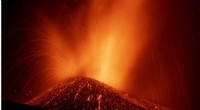
1. Environmental Changes: Volcanic eruptions can dramatically alter landscapes and climates. When large volcanoes erupt, they release enormous amounts of ash, dust, and gases into the atmosphere. Ash fall can block sunlight, causing global cooling and reduced plant growth. Volcanic winters could have created challenging conditions for early humans, forcing them to adapt to new environments or migrate to more favorable regions.
2. Habitat Creation: Volcanic activity can also be associated with the creation of new landmasses, such as islands. New islands provide potential migration routes and allow humans to explore and colonize diverse ecosystems. For example, the emergence of land bridges as a result of shifts in tectonic plates, influenced by volcanic activity, made it possible for early human ancestors to cross water bodies and expand their habitats.
3. Resource Distribution: Volcanic regions are often rich in minerals and metals, resources that are vital for human technological advancement. As humans evolved and began crafting tools and weapons, the proximity to volcanic regions provided easy access to essential materials. Early human settlements often occurred near volcanic areas, facilitating access to vital resources.
4. Population Dispersal: Volcanic eruptions can cause significant population displacements. Natural disasters caused by volcanoes prompted some groups to seek alternative regions with more favorable conditions for survival. These migrations have contributed to human dispersion and increased diversity across different geographical areas. For instance, in cases of ash clouds reducing food supply in one location, human populations dispersed in search of new resources.
5. Technological Innovations: Volcanoes shaped human innovation. In early human societies, exposure to volcanic environments stimulated creative problem-solving. The ability to utilize volcanic materials for tool-making and shelter construction became essential for survival in an ever-changing landscape.
6. Cultural Impact: Volcanic events in early human history could have inspired awe and veneration. Archaeological findings show the reverence and recognition of significant volcanic events in societies. Cultural interpretations of such events contributed to religious beliefs and myths surrounding the role of volcanoes. For example, some cultures attribute volcanic eruptions to supernatural forces or deities.
In conclusion, volcanic activity has played a multifaceted role in human evolution and migration, directly and indirectly influencing population movements, resource accessibility, cultural developments, and environmental transformation. Understanding the connections between volcanic activity and human history provides insights into the resilience and adaptability of our species across geological eras.