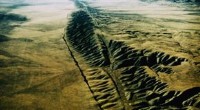
Continental rifting is the process by which a continent splits into two or more smaller continents. This process is often the first stage in the formation of a new ocean basin. Rifting occurs when the Earth's crust is stretched and thinned, causing it to break apart.
The traditional view of continental rifting is that it is a two-stage process. In the first stage, the crust is stretched and thinned, causing it to form a rift valley. In the second stage, the rift valley collapses and a new ocean basin forms.
However, the new study suggests that continental rifting is actually a more complex process. The researchers found that, in addition to the two-stage process, there is also a third stage, in which the rift valley undergoes a period of uplift. This uplift is caused by the injection of magma into the crust, which causes the crust to swell.
The researchers also found that the amount of uplift that occurs during the third stage of continental rifting is variable. This variability is likely due to differences in the composition of the crust and the rate at which magma is injected.
The new findings have implications for our understanding of how continents split apart and how new ocean basins form. They also provide insights into the geological processes that occur during the early stages of continental rifting.
The study is a collaboration between researchers from the University of Oslo, the University of Cambridge, the Geomar Helmholtz Centre for Ocean Research Kiel, the University of Bergen, and the University of Oxford.