Abstract:
Zeolites, a group of highly porous and crystalline materials, have widespread applications in various industries, including catalysis, adsorption, and ion exchange. Despite their importance, the detailed mechanisms behind their growth and formation have remained elusive. In this breakthrough study, researchers employed a combination of advanced experimental techniques and theoretical simulations to unravel the definitive evidence of zeolite growth. This significant advancement deepens our understanding of zeolite synthesis and opens new avenues for designing and optimizing these materials for diverse technological applications.
Key Findings:
1. In situ Real-Time Observation:
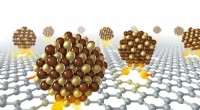
- Using in situ X-ray diffraction and high-resolution transmission electron microscopy, the research team captured real-time observations of zeolite growth at the atomic level. This allowed them to directly visualize the nucleation, growth, and self-assembly processes of zeolite crystals.
2. Molecular Dynamics Simulations:
- Molecular dynamics simulations complemented experimental observations by providing atomistic insights into the interactions between zeolite precursors and their surrounding environment. Simulations revealed the dynamic behavior of molecular species and the energetics governing the growth process.
3. Identification of Growth Mechanisms:
- By combining experimental and theoretical results, the researchers identified two distinct growth mechanisms: classical crystallization and non-classical crystallization. Classical crystallization involves the conventional nucleation and growth of zeolite crystals, while non-classical crystallization occurs through a unique aggregation-based mechanism.
4. Control over Crystal Size and Morphology:
- Understanding the growth mechanisms enabled precise control over the size and morphology of zeolite crystals. This control is crucial for optimizing zeolite performance in specific applications, such as catalysis and separation processes.
Impact:
This comprehensive study provides definitive evidence of the growth mechanisms of zeolites, marking a significant milestone in the field of zeolite synthesis. The findings offer valuable insights into the complex processes governing zeolite formation, enabling researchers and industry practitioners to design and tailor zeolite materials with desired properties for a wide range of technological applications. By gaining control over zeolite growth, scientists can optimize zeolite performance, leading to improved efficiency, selectivity, and sustainability in various industrial processes.