Wind erosion occurs when strong winds pick up and carry away soil and rock particles. This can happen in dry areas, where there is little vegetation to hold the soil in place, and in windy areas, such as coastal regions.
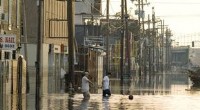
Water erosion occurs when flowing water carries away soil and rock particles. This can happen during heavy rainfall, when rivers and streams overflow and flood, and when water flows down hillsides.
Ice erosion occurs when glaciers and ice sheets move across the land, scraping away soil and rock particles. This can happen in polar regions, and in mountainous areas.
Gravity erosion occurs when soil and rock particles fall downhill, due to gravity. This can happen on steep slopes, such as cliffs and mountains.
Erosion can create a variety of unusual shapes and structures. For example, wind erosion can create sand dunes and hoodoos (tall, thin pillars of rock). Water erosion can create canyons, gullies and waterfalls. Ice erosion can create cirques (bowl-shaped depressions), arêtes (sharp ridges of rock) and horns (sharp peaks). Gravity erosion can create landslides, debris flows and rock avalanches.
Erosion is a natural process, but it can also be harmful to human activities. For example, erosion can damage buildings, roads and bridges, and it can also lead to loss of soil fertility.