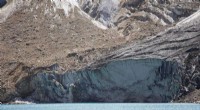
The study, published in the journal Nature Geoscience, found that the algae is creating a "dark zone" at the margins of the ice sheet, which is absorbing more heat from the sun and causing the ice to melt faster.
The dark zone is caused by the algae's dark pigments, which absorb sunlight. This sunlight is then converted into heat, which melts the ice.
The researchers found that the dark zone is most pronounced during the summer months, when the sun is strongest. During this time, the algae can cause the ice to melt up to 10 times faster than the surrounding ice.
The study's findings are significant because they suggest that algae growth on the Greenland Ice Sheet could be a contributing factor to the ice sheet's accelerating rate of melting. The ice sheet is currently losing ice at an unprecedented rate, and scientists are concerned that this could lead to sea level rise and other climate impacts.
"Our findings suggest that algae growth could be a significant contributor to the melting of the Greenland Ice Sheet," said study lead author Joseph Cook, a postdoctoral researcher at CU Boulder's Institute of Arctic and Alpine Research (INSTAAR). "This is something that we need to take into account when we are modeling the future of the ice sheet and its impact on sea level rise."
The researchers say that further studies are needed to determine how widespread algae growth is on the Greenland Ice Sheet and how much it is contributing to the ice sheet's melting.
"This is a new area of research, and we are still learning about the role that algae is playing in the melting of the Greenland Ice Sheet," Cook said. "But our findings suggest that this is a significant factor that needs to be considered when we are trying to understand the future of the ice sheet and its impact on climate change."
In addition to Cook, the study's co-authors include INSTAAR Director Waleed Abdalati and CU Boulder Professor Andrew Fountain.