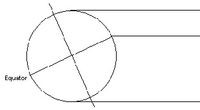
1. Magnetic Reversals: The Earth's magnetic field undergoes periodic reversals, where the polarity of the field flips. When new oceanic crust forms at mid-ocean ridges, it records the magnetic field orientation at the time of its formation. As the crust moves away from the ridge, it preserves this magnetic signature.
2. Magnetic Anomaly Patterns: As the ocean floor spreads, the magnetic stripes on either side of the ridge form symmetric patterns. These stripes represent the alternating periods of normal and reversed polarity of the Earth's magnetic field. By studying the width and pattern of these stripes, scientists can reconstruct the history of magnetic field reversals.
3. Magnetic Anomaly Profiles: Scientists use magnetometers to measure the magnetic field strength and orientation at various points on the ocean floor. These measurements are plotted to create magnetic anomaly profiles, which show the variations in magnetic field intensity across the seafloor.
4. Plate Tectonics and Spreading Rates: By analyzing magnetic anomaly profiles and comparing them with the known history of magnetic field reversals, scientists can determine the age of different parts of the ocean floor. This information, combined with the distance between the magnetic stripes, allows for the calculation of spreading rates. Spreading rates provide insights into the dynamics of plate tectonics and the processes occurring at mid-ocean ridges.
5. Crustal Formation and Age: The age of the ocean crust can be estimated by measuring the distance from the spreading ridge to a particular magnetic anomaly. This enables the creation of seafloor age maps, which are essential for understanding the evolution and age distribution of the ocean basins.
6. Crustal Properties and Processes: Magnetic stripes also help identify areas with different crustal properties, such as variations in thickness, composition, and structural features. This information contributes to our understanding of crustal formation processes and the dynamics of the Earth's interior.
In summary, mapping magnetic stripes on the ocean floor allows scientists to determine the age and spreading rates of oceanic crust. This information is crucial for studying plate tectonics, understanding the evolution of ocean basins, and gaining insights into the Earth's dynamic processes.