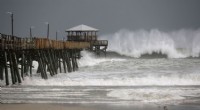
The Pacific Ocean is the largest and deepest ocean on Earth, covering more than 60 million square kilometers. It is home to a vast array of marine life, including some of the largest animals on the planet, such as the blue whale and the giant squid. However, the Pacific is also one of the most remote and inhospitable oceans on Earth. The waters are often stormy and the weather can be unpredictable, making it difficult for humans to survive.
For thousands of years, humans were unable to colonize the Pacific islands. This was due in part to the fact that the ENSO was much more active during this time. ENSO is a climate phenomenon that causes the surface temperature of the Pacific Ocean to vary from year to year. During El Niño years, the Pacific Ocean is warmer than usual, while during La Niña years, the Pacific Ocean is cooler than usual. These changes in temperature can have a significant impact on the climate of the Pacific islands, making them more or less habitable for humans.
Around 3,500 years ago, the ENSO shifted into a much weaker state. This made the Pacific islands more habitable, and humans were finally able to colonize them. The study found that the colonization of the Pacific islands occurred at the same time as a dramatic decrease in the frequency and magnitude of ENSO events. This suggests that the weakening of ENSO was a key factor in the colonization of the Pacific islands.
The study also helps explain why the Pacific islands were the last major ocean to be settled by humans. The Atlantic and Indian Oceans are much more hospitable than the Pacific Ocean, and they were both colonized by humans thousands of years before the Pacific. The study suggests that the ENSO was the main factor that prevented humans from colonizing the Pacific islands until 3,500 years ago.