The Research Behind the Headlines:
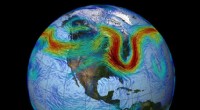
The claims about the Gulf Stream's collapse originate from a 2018 study published in the journal "Nature Climate Change." The study, led by researchers at the Potsdam Institute for Climate Impact Research (PIK), used computer simulations to investigate the potential impacts of climate change on the Atlantic Meridional Overturning Circulation (AMOC). The AMOC is a complex system of ocean currents that includes the Gulf Stream, and it plays a crucial role in regulating Earth's climate by transporting warm water from the tropics to the North Atlantic.
The PIK study found that under certain high-emission climate scenarios, the AMOC could potentially experience a temporary weakening or even a complete shutdown in the future. However, it's important to note that the study's findings were based on worst-case scenarios that represent the extreme end of the spectrum. Moreover, the study did not specifically predict that the AMOC would collapse by 2025, but rather indicated that it could happen sometime in the 21st century if greenhouse gas emissions continue at current rates.
Why the Gulf Stream Collapse is Unlikely:
Scientific consensus currently suggests that the Gulf Stream is a stable and resilient system. Several reasons exist for this:
Gradual Changes: Climate change affects the Gulf Stream gradually, and there is no evidence to suggest an abrupt or catastrophic collapse. Changes in the AMOC and the Gulf Stream tend to occur slowly over decades or even centuries.
Natural Variability: The Gulf Stream is subject to natural variability on various timescales. Changes in its strength and position have been observed in the past, but these variations have not resulted in a collapse.
Counteracting Mechanisms: The ocean has several mechanisms that help counteract the effects of climate change on the Gulf Stream. For instance, increased melting of Arctic sea ice can lead to changes in ocean circulation patterns that support the Gulf Stream rather than undermining it.
Global Climate Models: While computer models cannot perfectly predict future climate conditions, the majority of reputable global climate models do not predict a collapse of the Gulf Stream in the near future.
In conclusion, the alarmist headlines about the imminent collapse of the Gulf Stream by the year 2025 are inaccurate and misleading. The scientific evidence suggests that while climate change poses risks to the global climate system, a catastrophic collapse of the Gulf Stream is not supported by the current understanding of ocean dynamics and climate processes.