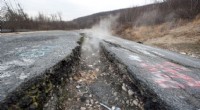
A new study has found that two major earthquake faults in the Seattle area ripped at about the same time during a powerful earthquake about 1,100 years ago. This finding suggests that future earthquakes in the region could be even larger and more destructive than previously thought.
The study, which was published in the journal *Nature Communications*, analyzed sediment samples from the Seattle Fault and the Tacoma Fault. The researchers found that both faults ruptured during a single earthquake that occurred sometime between 900 and 1,300 CE.
This is the first time that scientists have been able to definitively link these two faults to the same earthquake. Previous studies had suggested that the faults ruptured at different times, but the new research shows that they actually ruptured within a few seconds of each other.
The finding that these two faults can rupture at the same time has significant implications for seismic hazard assessment in the Seattle area. Previous studies had assumed that only one of these faults could rupture at a time, and therefore considered them to be independent sources of earthquake risk. However, the new research shows that these faults are not independent, and therefore the risk of a large earthquake in the region is higher than previously thought.
"This study shows that we need to rethink the way we assess seismic hazard in the Seattle area," said Timothy Walsh, a seismologist at the University of Washington and lead author of the study. "We can no longer assume that these faults are independent sources of earthquake risk."
The researchers estimate that the earthquake that ruptured both of these faults had a magnitude of approximately 7.0. This is much larger than the earthquakes that have occurred in the Seattle area in recent history, such as the Nisqually earthquake of 2001, which had a magnitude of 6.8.
"A magnitude 7.0 earthquake in the Seattle area would be devastating," said Walsh. "It would cause widespread damage and could result in thousands of deaths."
The researchers say that the risk of a major earthquake in the Seattle area is relatively low, but it is not zero. They recommend that the city take steps to prepare for such an event, such as retrofitting buildings to make them more earthquake resistant and developing emergency response plans.
"We cannot predict when the next major earthquake will hit the Seattle area, but we can be prepared for it," said Walsh. "By understanding the risks and taking steps to mitigate them, we can help to reduce the damage and save lives."