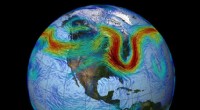
*Arctic amplification* refers to the phenomenon in which the Arctic region is warming at a rate that is twice as fast as the global average. This is due to a number of factors, including the loss of sea ice, the melting of the Greenland ice sheet, and changes in atmospheric circulation.
A new study, published in the journal *Nature Climate Change*, suggests that surface types also play a role in Arctic amplification. The study found that areas with low surface albedo, such as forests and dark-colored rocks, absorb more heat from the sun than areas with high surface albedo, such as snow and ice. This difference in heat absorption can lead to localized warming, which can in turn contribute to Arctic amplification.
The study's findings have implications for our understanding of how the Arctic is changing and how it may continue to change in the future. As the Arctic continues to warm, it is likely that we will see more extreme weather events, such as heat waves, wildfires, and flooding. These events can have a devastating impact on Arctic ecosystems and communities, and they can also contribute to global climate change.
Understanding the role of surface types in Arctic amplification
The study's findings highlight the importance of understanding the role of surface types in Arctic amplification. By understanding how different surface types interact with the sun's energy, we can better predict how the Arctic will change in the future. This information can help us to develop strategies to mitigate the impacts of Arctic amplification and protect the Arctic ecosystem.
Here are some of the key findings of the study:
* Areas with low surface albedo, such as forests and dark-colored rocks, absorb more heat from the sun than areas with high surface albedo, such as snow and ice.
* This difference in heat absorption can lead to localized warming, which can in turn contribute to Arctic amplification.
* The study's findings have implications for our understanding of how the Arctic is changing and how it may continue to change in the future.
* As the Arctic continues to warm, it is likely that we will see more extreme weather events, such as heat waves, wildfires, and flooding.
* These events can have a devastating impact on Arctic ecosystems and communities, and they can also contribute to global climate change.
Implications for the future
The study's findings have important implications for the future of the Arctic. As the Arctic continues to warm, it is likely that we will see more extreme weather events, such as heat waves, wildfires, and flooding. These events can have a devastating impact on Arctic ecosystems and communities, and they can also contribute to global climate change.
By understanding the role of surface types in Arctic amplification, we can better predict how the Arctic will change in the future. This information can help us to develop strategies to mitigate the impacts of Arctic amplification and protect the Arctic ecosystem.
Here are some of the things we can do to mitigate the impacts of Arctic amplification:
* Reduce our greenhouse gas emissions.
* Invest in renewable energy sources.
* Protect and restore Arctic ecosystems.
* Develop early warning systems for extreme weather events.
* Help Arctic communities adapt to the changing climate.
By taking these steps, we can help to protect the Arctic and its people from the impacts of climate change.