The Cleveland-Lloyd Dinosaur Bone Bed was discovered in 1927 by a team of paleontologists from the American Museum of Natural History in New York City. The team was led by Barnum Brown, one of the most famous paleontologists of his time. Brown and his team spent several years excavating the bone bed, and they eventually collected over 10,000 individual dinosaur bones.
The Cleveland-Lloyd Dinosaur Bone Bed is so important because it provides a rare glimpse into the Late Cretaceous ecosystem of North America. The bones that have been found at the site represent a wide variety of dinosaurs, from small, bipedal herbivores to large, carnivorous predators. The site also contains the remains of other animals, such as turtles, crocodiles, and fish.
The Cleveland-Lloyd Dinosaur Bone Bed has been studied by paleontologists for decades, and it has helped to shed light on the evolution of dinosaurs and the ancient environment of North America. The site is now protected as a National Natural Landmark, and it is one of the most popular tourist destinations in Utah.
In 2014, a team of paleontologists from the University of Utah returned to the Cleveland-Lloyd Dinosaur Bone Bed to conduct a new excavation. The team used state-of-the-art technology to scan the site and identify new bones that had been missed by previous excavations. The team also collected new data on the geology and paleontology of the site.
The new data from the 2014 excavation has helped to provide a more complete picture of the Cleveland-Lloyd Dinosaur Bone Bed and its importance to our understanding of dinosaur evolution. The site is truly a treasure trove of information, and it will continue to be studied by paleontologists for years to come.
Here are some additional facts about the Cleveland-Lloyd Dinosaur Bone Bed:
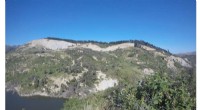
- The bone bed is located in the Morrison Formation, a geologic formation that is known for its rich dinosaur fossil record.
- The bone bed is thought to have been formed by a massive flood that swept across the area around 150 million years ago. The floodwaters carried away the bodies of dinosaurs and other animals, and they were deposited in a low-lying area that eventually became the Cleveland-Lloyd Dinosaur Bone Bed.
- The bone bed is one of the few places in the world where the remains of both Tyrannosaurus rex and Triceratops have been found together.
- The bone bed has also produced the remains of other dinosaurs, such as Stegosaurus, Allosaurus, and Camptosaurus.
- The Cleveland-Lloyd Dinosaur Bone Bed is a National Natural Landmark and is open to the public. Visitors can hike through the bone bed and see the dinosaur fossils that have been excavated.