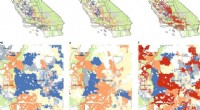
1. Seismic Hazard Assessment: Geophysics helps assess seismic hazards by identifying and characterizing earthquake-prone areas. Seismic studies, including seismic hazard analysis, microzonation, and ground motion prediction, are conducted to evaluate the potential for ground shaking, liquefaction, and other earthquake-related hazards. This information is essential for developing building codes, land-use planning, and emergency response plans.
2. Volcanic Hazard Assessment: Geophysical methods are used to monitor and assess volcanic activity and hazards. Techniques such as seismic monitoring, ground deformation measurements, and gas emission studies help identify potentially active volcanoes, track their activity, and forecast eruptions. This information supports early warning systems, evacuation planning, and risk mitigation measures for volcanic regions.
3. Landslide Hazard Assessment: Geophysics contributes to landslide hazard assessment by studying slope stability, identifying landslide-prone areas, and evaluating triggering factors such as rainfall, earthquakes, and human activities. Geophysical techniques, including electrical resistivity tomography, seismic refraction, and ground-penetrating radar, are used to investigate subsurface conditions, detect potential failure planes, and monitor slope movement.
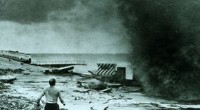
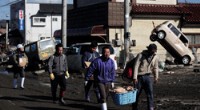
4. Tsunami Hazard Assessment: Geophysics helps assess tsunami hazards by studying coastal geomorphology, seafloor topography, and sediment deposits. High-resolution bathymetric surveys, seismic reflection profiling, and numerical modeling are used to identify tsunami-prone areas, estimate wave heights, and simulate tsunami propagation. This information is crucial for developing tsunami warning systems, evacuation plans, and coastal infrastructure design.
5. Groundwater and Water Resource Management: Geophysics contributes to disaster planning related to water resources by studying groundwater recharge and discharge, aquifer properties, and groundwater quality. Geophysical methods such as electrical resistivity imaging, electromagnetic induction, and groundwater modeling help assess water availability, identify potential contamination sources, and manage water resources during and after disasters.
6. Geohazard Monitoring: Geophysical monitoring techniques, including seismic stations, tiltmeters, strainmeters, and GPS networks, are used to track ground deformation, tilt, strain, and other indicators of potential geohazards. This real-time monitoring enables early detection of changes in subsurface conditions, allowing authorities to issue timely warnings and implement mitigation measures.
7. Data Analysis and Modeling: Geophysics utilizes advanced data analysis and modeling techniques to process and interpret geophysical data. Numerical modeling and simulations are used to predict natural disaster scenarios, assess the impact of different mitigation strategies, and develop response plans.
By providing critical information about natural hazards and subsurface conditions, geophysics enables disaster planners to make informed decisions, develop effective mitigation strategies, and reduce the risk and impact of disasters on communities and infrastructure.