The island of Kea is located within sight of the better known Cycladic islands of Santorini, Mykonos, and Delos.
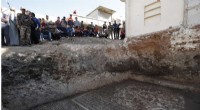
The islet of Agios Andreas, which is only 1.25 square kilometres in area, has yielded a series of structures that suggest a highly organised and industrialised society lived on Kea over 4,000 years ago.
The settlement on Agios Andreas was founded in the Early Bronze Age (around 3000-2000 BCE). This settlement was a relatively small village, but it was surrounded by a large number of workshops and factories.
These workshops and factories produced a variety of goods, including pottery, tools, and jewellery. The goods produced on Agios Andreas were exported to other parts of the Aegean Sea, and the settlement became an important centre of trade and commerce.
The society on Agios Andreas was also highly stratified, with a small elite class ruling over a large population of workers. The elite class lived in large houses, while the workers lived in smaller houses or in communal barracks.
The settlement on Agios Andreas was abandoned in around 1100 BCE, for reasons that are not yet clear. However, the evidence suggests that the settlement was a thriving centre of industry and trade for over 2,000 years.
The excavations on Agios Andreas are providing important new insights into the development of early industrial societies in the Aegean Sea.