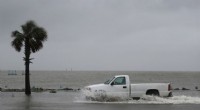
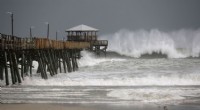
As sea levels rise due to climate change, coastal communities around the world are facing significant economic challenges. The increasing frequency and severity of flooding, erosion, and storm damage can lead to widespread property damage, loss of tourism revenue, and disruption of local businesses.
Property Damage
One of the most direct economic impacts of rising seas is property damage. As sea levels rise, waves can reach higher and cause more damage to homes, businesses, and infrastructure. This can lead to costly repairs and, in some cases, even the complete destruction of property. In the United States, for example, the National Oceanic and Atmospheric Administration (NOAA) estimates that rising seas could cause up to $1 trillion in property damage by the end of the century.
Loss of Tourism Revenue
Coastal communities often rely on tourism as a major source of revenue. However, rising seas can threaten tourism by eroding beaches, damaging coastal infrastructure, and making it more difficult for visitors to access the coast. This can lead to a decline in tourism revenue, which can have a significant impact on the local economy. For example, a study by the University of California, Berkeley, found that rising seas could cause the state of California to lose up to $2 billion in tourism revenue by 2050.
Disruption of Local Businesses
Rising seas can also disrupt local businesses by flooding, erosion, and other hazards. This can lead to lost revenue, increased costs, and even business closures. For example, a study by the University of Maryland Center for Environmental Science found that rising seas could cause up to $1 billion in losses to the commercial fishing industry in the Chesapeake Bay region by 2050.
Adaptation and Mitigation
Coastal communities are taking a variety of steps to adapt to and mitigate the impacts of rising seas. These include:
* Building seawalls and other coastal defenses. These structures can help to protect property from flooding and erosion.
* Elevating homes and businesses. This can help to keep them above the reach of rising seas.
* Restoring wetlands and other natural habitats. These habitats can help to absorb floodwaters and reduce erosion.
* Educating the public about the risks of rising seas. This can help people to make informed decisions about how to protect their property and businesses.
The economic impacts of rising seas are significant and are expected to grow in the future. Coastal communities need to take action now to adapt to and mitigate these impacts in order to protect their economies and livelihoods.
Conclusion
Rising seas pose a significant threat to coastal economies around the world. By understanding the risks and taking action to adapt, coastal communities can help to protect their economies and livelihoods from the impacts of climate change.