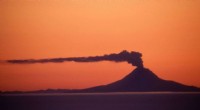
The researchers analyzed the chemical composition of zircon crystals from the Jack Hills in Western Australia, which are some of the oldest rocks on Earth. They found that the zircons contained high levels of hafnium, which is an element that is enriched in volcanic ash. This suggests that the Jack Hills zircons were formed from volcanic ash that erupted from the Earth's mantle.
The researchers believe that the volcanic ash that formed the Jack Hills zircons was deposited in a shallow ocean. The ash was then buried and heated, which caused it to melt and crystallize. The resulting rocks were the protoliths of the Jack Hills zircons.
The study's findings provide new evidence for the theory that continents were formed by the accumulation of volcanic ash. This theory is supported by other geological evidence, such as the fact that continents are often found near volcanic arcs.
The research also has implications for understanding the early history of the Earth. The Jack Hills zircons are the oldest known rocks on Earth, and they provide evidence for the existence of volcanic activity on Earth as early as 4.4 billion years ago. This suggests that the Earth was a much more active planet in its early history than it is today.
The study's findings are a significant contribution to our understanding of the early history of the Earth and the formation of continents.