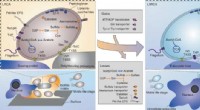
When the deep ocean becomes anoxic, it can lead to a decrease in the amount of oxygen available to be recycled back into the Earth's mantle. This can cause the oxygen fugacity of the mantle to decrease, which in turn can lead to changes in the composition of magmas produced by convergent margins.
One of the most significant effects of OAEs on convergent margin magmas is an increase in the amount of iron in the magma. Iron is a highly reactive element that is easily oxidized, so when the oxygen fugacity of the mantle decreases, more iron is able to remain in the magma. This can lead to the formation of iron-rich minerals, such as magnetite and pyroxene, in convergent margin magmas.
In addition to increasing the amount of iron in the magma, OAEs can also affect the composition of other elements in the magma. For example, OAEs can lead to an increase in the amount of sulfur in the magma, which can lead to the formation of sulfide minerals, such as pyrite and chalcopyrite. OAEs can also lead to a decrease in the amount of calcium in the magma, which can lead to the formation of more sodic minerals, such as plagioclase and amphibole.
The effects of OAEs on convergent margin magmas can have a significant impact on the composition and evolution of the Earth's crust. OAEs can lead to the formation of new types of rocks and minerals, and they can also affect the composition of the Earth's atmosphere and oceans.