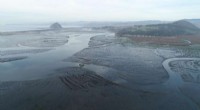
Formation of Barrier Islands
Barrier islands are formed by the deposition of sediment from two main sources: longshore transport and overwash.
Longshore transport is the movement of sediment along the shoreline by waves and currents. When waves break on the beach, they carry sand and other sediment up the beach face. As the waves backwash, they carry the sediment back down the beach face and into the nearshore zone. This process of back-and-forth transport results in the buildup of sediment along the shoreline.
Overwash is the process by which waves and storm surges wash over the crest of a barrier island and deposit sediment on the island's back side. Overwash typically occurs during storms, when waves are higher and more powerful. The sediment deposited by overwash helps to build up the barrier island's elevation and protects the island from erosion.
Types of Barrier Islands
There are two main types of barrier islands: transgressive and regressive.
* Transgressive barrier islands are formed when the sea level is rising. As the sea level rises, the shoreline moves inland, and the barrier islands that were once offshore become attached to the mainland.
* Regressive barrier islands are formed when the sea level is falling. As the sea level falls, the shoreline moves seaward, and the barrier islands that were once attached to the mainland become separated from the mainland.
Importance of Barrier Islands
Barrier islands provide a number of important benefits, including:
* Storm protection: Barrier islands protect the mainland from storm surges and flooding. During storms, waves and storm surges can overtop the barrier islands, but they are then dissipated before they reach the mainland.
* Erosion control: Barrier islands help to control erosion of the shoreline by trapping sand and other sediment. This sediment would otherwise be lost to erosion, and the mainland would be more vulnerable to storm damage.
* Habitat for plants and animals: Barrier islands provide important habitat for a variety of plants and animals. The islands' dunes, beaches, and wetlands support a wide range of plant and animal life, including many endangered species.
Barrier islands are dynamic systems that are constantly changing in response to waves, currents, and storms. They are essential to the health of the coastal ecosystem, and they provide a number of important benefits to humans.