A tornado watch and a tornado warning may both spell trouble. While, as the names suggest, one requires more immediate action than the other, you should heed both alerts. Learn more about the implications of a tornado watch vs. warning.
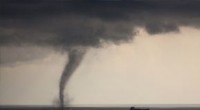
ContentsA tornado is "a violently rotating column of air touching the ground" that can have winds of up to 300 miles per hour (483 kilometers per hour), according to the National Weather Service.
Deriving from severe thunderstorms, tornadoes form in an instant and can be over quickly. They do not typically last more than 15 minutes but can leave extensive damage behind.
A tornado watch is an alert the Storm Prediction Center issues when there is an increased possibility of a tornado. The storm watch area is usually big, and a tornado warning area might fall within it.
If you receive a tornado watch alert, you should be ready to take action. The National Weather Service suggests you review your emergency plans and check supplies. Tornado watches can turn into tornado warnings.
A tornado warning means that there is a tornado and you should immediately get to safety. "Move to an interior room on the lowest floor of a sturdy building. Avoid windows. If in a mobile home, a vehicle, or outdoors, move to the closest substantial shelter and protect yourself from flying debris," according to the National Weather Service.
Unlike a tornado watch area, which can span counties or even states, a tornado warning covers a smaller area.
A Doppler radar is one way to detect tornadoes. The National Severe Storms Laboratory developed the WSR-88D Mesoscale Detection Algorithm. Looking at radar data, forecasters gauge whether a rotation pattern could become a tornado.
"NSSL researchers discovered the Tornado Vortex Signature (TVS), a Doppler radar velocity pattern that indicates a region of intense concentrated rotation," according to NSSL. "The TVS appears on radar several kilometers above the ground before a tornado touches ground. It has smaller, tighter rotation than mesocyclone. While the existence of a TVS does not guarantee a tornado, it does strongly increase the probably of a tornado occurring."
Forecasters can also use phased array technology, which scans an area in a minute, allows them to see whether a tornado is forming faster than if they were using radar.
And then there are storm spotters. These can be emergency personnel or volunteers. Storm spotters go through training so they can then report what they see to the National Weather Service.
Even without proper training, you can familiarize yourself with signs that there may be a tornado forming.
If there's a tornado in your area, you want to act quickly, so you should have everything in place before severe weather strikes.