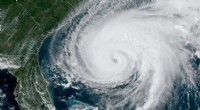
As residents of coastal regions know all too well, hurricanes can be devastating forces of nature. Understanding hurricane categories and their associated impacts is crucial for preparedness and safety. In this blog post, we delve into the Saffir-Simpson Hurricane Wind Scale, the basics of a Category 1 hurricane, and the importance of tracking these powerful storms. Are you ready to face the storm?
The Saffir-Simpson Hurricane Wind Scale, developed by the National Hurricane Center, is a rating system used to measure hurricane categories based on sustained wind speeds. But where did this scale come from, and how does it work?
Moreover, what are the limitations of this scale when it comes to predicting the potential destruction a storm may leave in its wake as it passes through? Let’s explore the origins, workings, and limitations of this widely-used hurricane classification system.
Devised in the early 1970s by Miami engineer Herbert Saffir and Robert Simpson, a meteorologist who was the director of the National Hurricane Center, the Saffir-Simpson Hurricane Wind Scale was created to classify hurricanes according to their wind speeds and potential for damage. By providing a standardized scale, the system aimed to better inform the public of a hurricane’s potential impact and help them prepare accordingly.
The scale is divided into five categories, ranging from Category 1 (the weakest) to Category 5.
The Saffir-Simpson scale ranges from Category 1 to Category 5, with each category representing a range of wind speeds and associated damage. For example:
It’s important to note that while the scale provides a general understanding of a hurricane’s potential impact, the specific damage a storm may cause depends on various factors, including:
As a result, the scale should not be considered an all-encompassing predictor of a hurricane’s consequences.
While the Saffir-Simpson scale is a useful tool for classifying hurricanes based on wind speeds, it has its limitations. The scale only considers a storm’s maximum sustained wind speed, ignoring other potential threats such as expected rainfall or storm surge, which can lead to flooding and even more devastating impacts.
This means that even a Category 1 hurricane, with its relatively lower wind speeds, could still cause significant damage and pose a serious threat to life and property if it brings heavy rainfall and storm surge.
Therefore, it’s essential to stay informed about all aspects of an approaching storm, not just its category.
When it comes to Category 1 hurricanes, one might wonder about the wind speeds involved, the typical damage they inflict, and some examples of past storms in this category. Dangerous winds, power outages, and downed trees are common in these storms, but how do they compare to more powerful tropical cyclones?
Let’s take a closer look at the basics of a Category 1 hurricane.
Category 1 hurricanes have sustained wind speeds ranging from 74 to 95 miles per hour. Although these winds are considered dangerous, they are significantly less powerful than those of higher-category hurricanes. For instance, Category 2 hurricanes have wind speeds between 96-110 mph, while Category 3 hurricanes, classified as “major” hurricanes, feature wind speeds of 111-129 mph.
As the extremely dangerous winds speed increases, so does the potential for extensive damage and life-threatening conditions caused by very dangerous winds.
Despite being the lowest category on the Saffir-Simpson scale, Category 1 hurricanes can still cause notable damage, especially to roofs, trees, and power lines. Many shallowly rooted trees may become fallen trees, blocking roads, and power outages can last for several days due to power poles downed.
However, Category 1 hurricanes generally cause less destruction than higher categories, which can lead to severe damage or even catastrophic impacts on homes, infrastructure, and communities.
There have been several notable Category 1 hurricanes throughout history, such as Hurricane Danielle, Hurricane Isaias in 2020, and Hurricane Dorian in 2019. While these storms caused significant damage in the areas they affected, they were not as destructive as higher-category hurricanes like Hurricane Andrew, a Category 5 storm that wreaked havoc in Florida in 1992.
Nevertheless, it’s essential to remember that even a Category 1 storm can pose a significant threat and requires adequate preparation and response.
As we’ve seen, Category 1 hurricanes can cause damage and disruption, but how do they compare to more powerful hurricanes in higher categories? With increasing wind speeds and potential for catastrophic damage, understanding the differences between hurricane categories is crucial for adequate preparedness and assessing the risks involved.
Let’s compare the categories in terms of wind speeds, damage, and frequency of occurrence.
As the category number increases, so do the wind speeds associated with each hurricane. Here is a breakdown of the wind speeds for each category on the Saffir-Simpson scale.
The substantial difference in wind speeds between categories highlights the increasing potential for damage and danger as the category number rises.
The destructive power of hurricanes is not to be underestimated. Even Category 1 hurricanes can cause significant damage.
The damage and impact of a hurricane vary greatly depending on its category. Category 1 hurricanes typically result in minor damage, such as damage to roofs, siding, and trees. In contrast, Category 5 hurricanes can cause catastrophic damage, including total roof failure, wall collapse, and the destruction of entire communities.
As the category number increases, so does the severity of the damage and the potential for loss of life and property, reaching a point where catastrophic damage will occur and incur major damage.
Category 1 hurricanes are the most common, with higher-category storms occurring less frequently. However, it’s important to note that even though Category 5 hurricanes are rare, they can cause extreme devastation when they do occur.
For this reason, staying informed about the potential risks and impacts of all hurricane categories is crucial for safety and preparedness.
While Category 1 hurricanes may not be as destructive as their higher-category counterparts, it’s still essential to be well-prepared for their potential impacts. From protecting your home and property to having an emergency supply kit and considering evacuation options, being ready for a Category 1 hurricane can make a significant difference in the safety and well-being of you and your family.
It’s important to take the necessary steps to prepare for a Category 1 hurricane.
Protecting your home and property from the impacts of a Category 1 hurricane involves securing windows with plywood or storm shutters, reinforcing your roof with hurricane straps or clips, and ensuring that outdoor items are properly secured.
Additionally, trimming trees and caulking windows and doors can help minimize potential damage from wind and rain.
Having an emergency supply kit on hand is crucial for weathering a Category 1 hurricane. This kit should include:
In addition to having an emergency kit, it’s important to have a plan in place for potential evacuations, sheltering in place, and communicating with family members during the storm.
While evacuation is generally not necessary for a Category 1 hurricane, it’s important to stay informed about the storm’s progress and follow any recommendations or orders from local authorities. Factors to consider when deciding whether to evacuate include the severity of the storm, the location of your home, and the availability of transportation.
Ensuring the safety of your family and pets, as well as the availability of shelters, should always be a top priority when planning to isolate residential areas.
Tracking hurricanes is essential for staying informed about their potential impacts and ensuring your safety during these powerful storms. By monitoring hurricane forecasts, public advisories, and warnings, you can be better prepared for what’s to come and take the necessary precautions to protect yourself, your family, and your property.
Let’s explore the methods used to track hurricanes and the importance of staying informed during hurricane season.
Meteorologists employ a variety of methods to track and predict hurricanes, including:
These methods work together to provide meteorologists with valuable information for tracking and predicting hurricanes.
Computer models use mathematical equations to simulate the behavior of storms and predict their paths, providing valuable information for forecasts and advisories.
Public advisories and warnings play a crucial role in informing the public about the potential dangers of an approaching hurricane. Issued by the National Hurricane Center, these advisories and warnings include storm surge warnings, hurricane watches, and evacuation orders.
Staying informed about these alerts and following their recommendations can help ensure your safety and the safety of those around you during a hurricane.
Hurricane season typically runs from June 1st to November 30th each year, with the peak for hurricanes occurring between late August and early September. This peak is generally attributed to the combination of warm ocean temperatures and conducive atmospheric conditions.
Being aware of hurricane season and its peak times can help you stay prepared and take necessary precautions when the threat of a hurricane is most likely.
As hurricane intensity increases due to climate change, some scientists and experts have debated whether the Saffir-Simpson Hurricane Wind Scale should be revised to include a Category 6. While the current scale has served as a helpful tool in categorizing hurricanes, there are arguments for and against the addition of a new category.
Let’s explore these arguments, the potential implications of a new category, and the current stance of experts and organizations on this topic.
Some scientists argue that the Saffir-Simpson scale should be revised to include a Category 6 due to the increasing frequency of extreme storms as a result of climate change. Proponents of this idea believe that a new category would provide more accurate information regarding the potential damage of a hurricane and help the public better understand the risks associated with these more powerful storms.
The new category would also help emergency management teams better prepare for and respond to these storms.
Adding a new category to the Saffir-Simpson scale could have significant implications for public perception, preparedness, and response to hurricanes. A Category 6 designation might prompt increased awareness of the dangers of hurricanes and the need for more robust preparation and response efforts.
Additionally, a new category could necessitate the development of more advanced hurricane forecasting and warning systems to accurately predict and communicate the potential impacts of these even more powerful storms.
Currently, there is no official Category 6 on the Saffir-Simpson scale, and most experts and organizations continue to use the existing scale to classify hurricanes. While some experts argue for the inclusion of a Category 6, others maintain that the current scale is adequate for assessing hurricane risks and informing the public about the potential impacts of these storms.
The debate continues, but for now, the Saffir-Simpson scale remains the standard for categorizing hurricanes based on wind speeds.
In conclusion, understanding the Saffir-Simpson Hurricane Wind Scale and the characteristics of each hurricane category is essential for preparedness and safety. While Category 1 hurricanes may not be as destructive as higher-category storms, they still pose risks that require vigilance and proper planning. By staying informed about hurricane forecasts, public advisories, and peak hurricane season, you can better protect yourself, your family, and your property from the potential impacts of these powerful storms. Stay safe and weather the storm!
This article was created using AI technology.