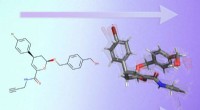
* Structure: ATP is composed of three main parts:
* Adenine: A nitrogenous base.
* Ribose: A five-carbon sugar.
* Three phosphate groups: These are the key to energy storage.
* Energy Storage: The bonds between the phosphate groups are high-energy bonds. These bonds are unstable and readily broken, releasing energy.
* How Energy is Released: When ATP is hydrolyzed (broken down), a phosphate group is removed, forming ADP (adenosine diphosphate) and releasing energy.
* ATP + H₂O → ADP + Pi + energy
* (Pi stands for inorganic phosphate)
* Recharging: The energy released in cellular processes (like glucose breakdown) is used to add a phosphate group back to ADP, reforming ATP. This process is called phosphorylation.
Here's an analogy: Imagine ATP like a fully charged battery. When you use the battery (hydrolyze ATP), it releases energy and becomes partially charged (ADP). You then need to recharge the battery (phosphorylate ADP) to use it again.
Key Points:
* ATP is the primary energy currency of cells.
* Energy is stored in the bonds between phosphate groups.
* The breakdown of ATP releases energy for cellular processes.
* ATP is constantly recycled through phosphorylation.