* Nuclear reactions: The nucleus can gain energy through nuclear reactions, such as:
* Nuclear fission: A heavy nucleus splits into lighter nuclei, releasing a tremendous amount of energy. This energy is released as kinetic energy of the daughter nuclei and gamma radiation.
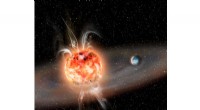
* Nuclear fusion: Light nuclei combine to form heavier nuclei, also releasing energy. This is the process that powers stars.
* Nuclear decay: Some unstable nuclei release energy by emitting particles or gamma rays. This is a form of energy release, but the nucleus itself doesn't "capture" the energy.
* Excitation: The nucleus can be excited to a higher energy state by absorbing a gamma ray. This excited state is unstable and the nucleus will eventually decay back to its ground state, releasing the energy as another gamma ray.
It's important to distinguish:
* Energy absorption: The nucleus can absorb energy from external sources, but this energy is usually quickly re-emitted or transferred.
* Energy capture: This term is typically used for electrons gaining energy from photons. Nuclei don't "capture" energy in the same way, but they do undergo processes that involve energy absorption and release.
In short: The nucleus of an atom can absorb energy through nuclear reactions and excitation, but it doesn't "capture" energy in the same way as an electron. The energy is typically quickly re-emitted or used to drive other nuclear processes.