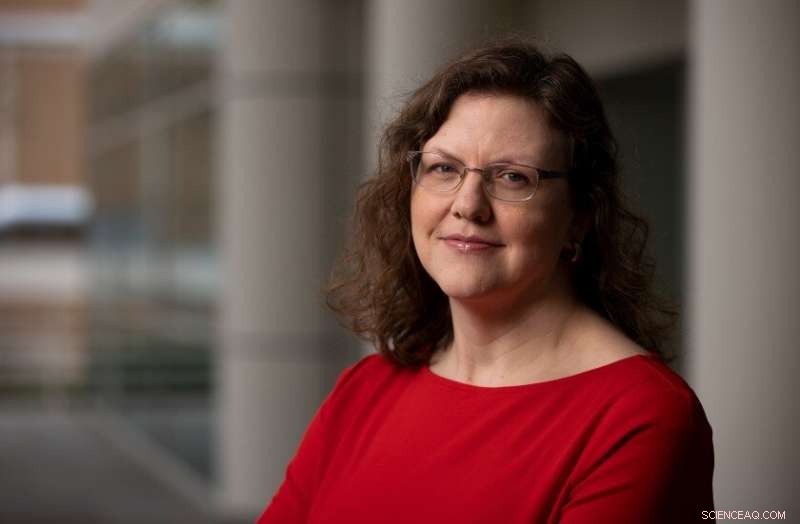
Amanda Hughes, assistant professor in the School of Technology, researches crisis informatics. Credit: Jaren Wilkey/BYU
School of Technology professor Amanda Hughes has spent her career studying social media during disasters and crises. Her work looks at how members of the public turn to social media during a crisis and how they find trustworthy information.
That research has become increasingly important during the coronavirus pandemic, as misinformation about the deadly virus has spread rapidly online. A lot of that misinformation on social media is clouding people's judgment and causing confusion.
"Because the COVID-19 crisis is a global event, we are seeing large volumes of social media data about it," Hughes said. "We've studied some big events in the past, but because this is a global pandemic, it is even more important that you have systems to sift through information to find what is really critical and trustworthy."
Hughes suggests three things we can do to find relevant and trustworthy information online during these uncertain times:
Misinformation often spreads when well-intentioned people hear things from friends of friends and share it as truth. While a lot of misinformation is currently being spread, there is something different about the COVID-19 pandemic from previous disasters: many people are also helping to search out misinformation and replace it with the truth.
"Because this event is slow moving and people are at home with resources, more individuals have the ability to digitally volunteer and be involved in finding relevant information for the public and emergency responders," Hughes said.
Hughes is currently working with professors from multiple universities and an official emergency responder in a digital volunteer team to perform different online tasks during the coronavirus crisis. These volunteers are doing a variety of jobs to sort through social media and find information or misinformation that official responders may need to address.
Hughes' students are also getting involved in different digital volunteer efforts to help stop the spread of the coronavirus and misinformation about it. As they look at how people share information and what kind of information they are sharing, they are able to code for what is relevant and help correct misinformation.
While Hughes and many others are searching out misinformation, individuals can also distinguish the truth by following Hughes' three suggestions to help determine what is accurate and helpful during this time.