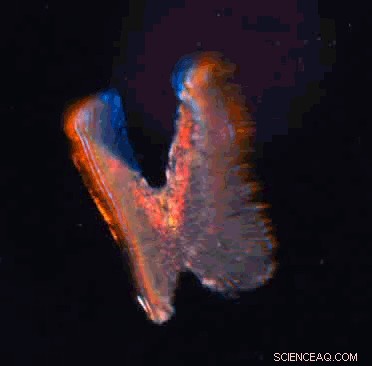
The 3-D robotic butterfly made from the color-changing biohybrid hydrogel. Credit: Fu et al., Sci. Robot. 3, eaar8580 (2018)
A team of researchers at Southeast University in Nanjing, China, has developed a heart-on-a-chip platform incorporating rat heart muscle cells, hydrogel and nanocrystals. In their paper published in the journal Science Robotics, the group describes their structure, how it was made, and the uses to which it might be put.
As researchers at pharmaceutical companies and other research institutes work to create new drugs for various maladies, others look for ways to assist them. To that end, heart-on-a-chip platforms have been developed to test the impact of drugs on heart anatomy. In this new effort, the researchers have turned to the chameleon for inspiration. As they describe it, they were inspired by a study of the means by which the lizard changes its colors. It gave them the idea to induce the same effect in a lab specimen rather than a living creature. The result of that effort is an oddly beautiful butterfly-like biobot, seemingly changing colors as it flaps its wings.
The platform is not actually a butterfly, or even related to one. Instead, it is a physical structure made by adding nanocrystals to a hydrogel and applying a layer of rat heart muscle cells—the fluttering occurs as the muscle cells contract and release. The expansion and contraction of the muscle cells also impact the nanocrystals, causing them to reflect different colors. Parts of the butterfly turn blue as cells contract while others turn red as they expand.
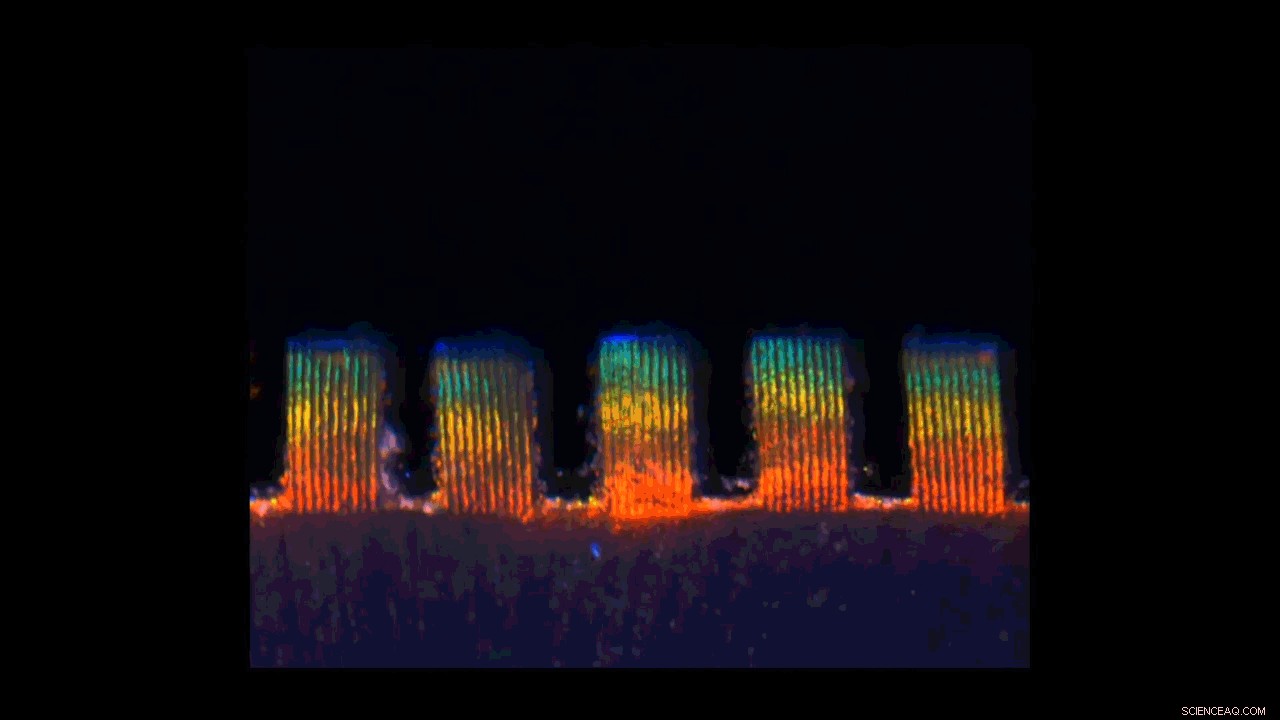
To demonstrate the effectiveness of the heart-on-a-chip system made of the color-changing biohybrid hydrogel, various concentrations of the drug isoproterenol were pumped into the chip to stimulate the heart cells. This close-up of the chip shows the color shift to blue when isoproterenol was added. Credit: Fu et al., Sci. Robot. 3, eaar8580 (2018)
The team created the platform in the shape of a butterfly to make the result more striking. Its purpose, however, is far more serious—to visually note what happens as drugs are applied to the heart cells—they may speed up contractions or slow them down, depending on what the drug was designed to do.
The team reports that they successfully tested the ability of their biobot butterfly by applying various amounts of the heart medication isoproterenol, which, they note, is similar to adrenaline. It is generally used to assist blood flow through a blockage by speeding up the heart rate. They note that similar types of platforms could conceivably be used in other areas, such as clothes that change color based on the wearer's heart rate.
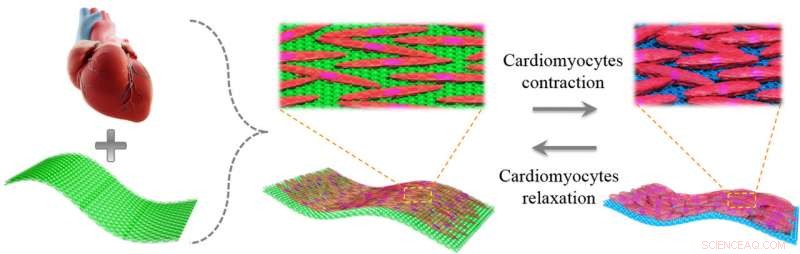
Schematic diagram of the construction of the bioinspired self-regulated structural color hydrogels by assembling engineered cardiomyocyte tissues on synthetic inverse opal hydrogel films. Credit: Fu et al., Sci. Robot. 3, eaar8580 (2018)
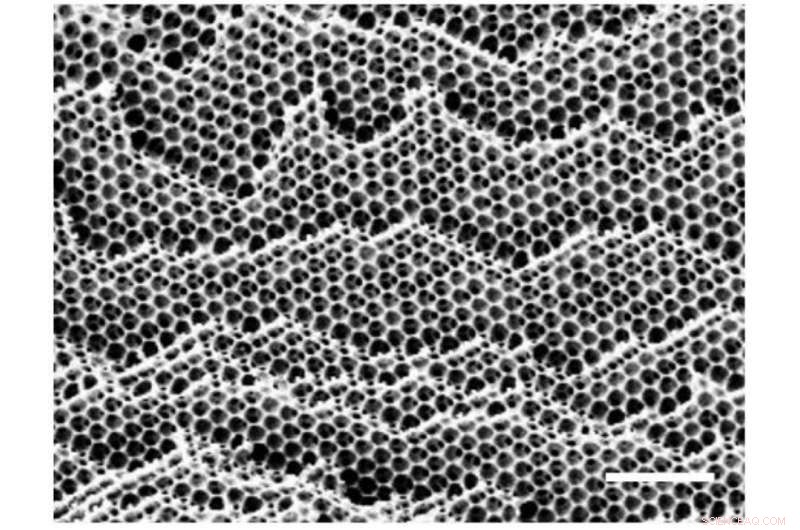
Magnification of the cross section of the microgroove-patterned color-changing hydrogel. Credit: Fu et al., Sci. Robot. 3, eaar8580 (2018)
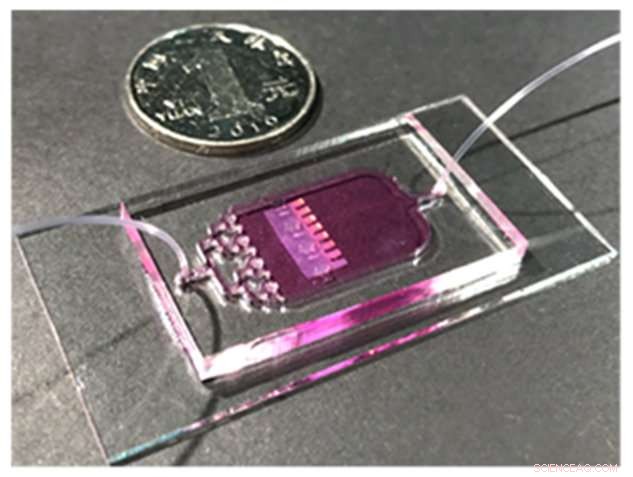
The biohybrid structural color-changing hydrogel integrated on a heart-on-a-chip. Credit: Fu et al., Sci. Robot. 3, eaar8580 (2018)
© 2018 TechXplore