By Tyler Lacoma, updated March 24, 2022

LED stands for light‑emitting diode. While the term “diode” refers broadly to a semiconductor that allows current to flow in one direction, an LED is a specialized diode engineered to emit light when forward‑biased. The two devices share the same basic semiconductor structure but diverge in purpose, materials, packaging, and electrical characteristics.
Standard diodes are primarily used as current‑control elements—rectifiers, voltage regulators, and signal switches—where their visibility is secondary. LEDs, on the other hand, are designed to convert electrical energy into visible light, so their packaging prioritizes light extraction and visual performance.
Conventional diodes are usually built from pure silicon, chosen for its predictable p‑n junction behavior. LEDs incorporate additional dopants—such as gallium, arsenic, indium, or phosphorus—to create a direct bandgap that facilitates photon emission. These compound semiconductors enable LEDs to emit a wide range of colors and achieve higher efficiency.
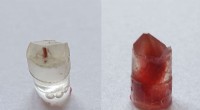
Typical diodes are encased in opaque ceramic or epoxy to protect the junction from moisture and mechanical stress. LED housings, by contrast, are constructed from transparent materials or lenses that allow light to escape. Some LEDs include diffusers or concentrators to shape the beam for applications from backlighting to spot‑lighting.
While both device types operate under forward bias, LEDs require precise current control to maintain brightness and lifespan. Excessive current can overheat the junction, leading to premature failure. Normal diodes are more tolerant of current variations, with their primary design focus on voltage drop and reverse‑breakdown characteristics.
Understanding these differences helps engineers select the right component for a given application—whether it’s a simple rectifier in a power supply or a high‑intensity LED array for automotive illumination.