By Dianne Hermance Updated Aug 30, 2022
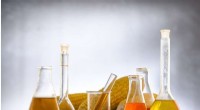
Michał Chodyra/iStock/GettyImages
The most basic physics laboratory equipment includes fume hoods, desks, tables, benches, and gas, water, and vacuum lines. Safety gear—gloves, goggles, and eyewash stations—ensures safe operation.
Physics labs employ a variety of analyzers to characterize samples: impedance analyzers, particle analyzers, optical multichannel analyzers, semiconductor parameter analyzers, spectrum analyzers, capacitance‑voltage (CV) analyzers, and X‑ray diffractometers for crystalline material characterization and phase identification.
Atomic‑physics setups feature specialized tools such as saturation‑absorption spectroscopy stages, radio‑frequency optical pumping rigs, and pulsed nuclear magnetic resonance (NMR) systems.
Data analysis and simulation are central to modern physics research. Common software packages include MATLAB, Python, IDL, Mathematica, Fiji, Origin, and LabVIEW. Quantitative image and data‑analysis tools are invaluable. In addition to PCs, 3D printers, Arduinos, and Raspberry Pi platforms expand experimental capabilities.
Electrical instrumentation encompasses CV analyzers, variable transformers (variacs), lock‑in amplifiers, and piezoelectric actuators. High‑voltage devices often require insulated gloves to protect operators.
Thermal studies require reliable heat sources. Simple hot plates and electric furnaces are standard, while gas furnaces and vacuum furnaces provide higher temperatures and reagent drying, respectively. Proper insulated gloves and tongs are mandatory for safety.
Laser systems are pivotal in optics experiments. Helium–neon (HeNe) lasers, fiber‑coupled lasers, tunable diode lasers, etalons, and beam‑steering devices are common. All laser work mandates appropriate safety goggles.
Sample preparation and testing use mortars, pestles, polishers, micronizing mills, sonicators, ultracentrifuges, nanomechanical testers, and hydraulic presses with stainless‑steel die sets for pellet fabrication.
Accurate measurement underpins all experiments. In addition to basic meter sticks, laboratories employ thermometers, electrical meters, electronic balances, stylus profilometers, ellipsometers, magnetostriction systems, and analytical balances for solid‑state studies.
Microscopy and imaging devices vary by discipline. Biophysics labs may use fluorescence and bright‑field microscopes, while materials science relies on scanning electron microscopes, light‑sheet fluorescence microscopes, digital holographic microscopes, and electrically tunable lenses. High‑speed CMOS cameras and digital cameras are also standard.
In biophysics, optical tweezers manipulate individual DNA molecules and measure bimolecular forces.
Ion‑dynamic research employs Langmuir and emissive probes, plasma cleaners, low‑temperature plasma confinement units, wave‑launching grids, and plasma‑source ion implantation (PSII) chambers, which can extend product lifespans.
Semiconductor labs use deep‑level transient spectroscopy systems, CLEO cones for silicon detector cooling and support, microwave probe stations, photodiodes, and optical amplifiers.
Thin‑film processing tools include dual‑ion‑beam sputtering systems, Filmetrics devices, and secondary ion mass spectrometers (SIMS). The SIMS can determine isotopic composition with a precision of up to 100 parts per million.