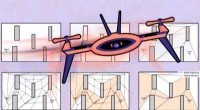
Understanding Bistable Devices
* Bistable: A device that can exist in one of two stable states, often represented as "on" and "off" or "1" and "0". These devices can hold their state even when the input is removed. Think of a light switch: It's either on or off, and it stays that way until you change it.
Non-Bistable Devices: The Opposite
Non-bistable devices don't have stable states. They respond directly to the input and return to a default state when the input is removed. Here are some types:
1. Linear Devices:
* Resistors: They simply resist the flow of current, their value remains constant.
* Capacitors: Store charge when voltage is applied but release it when the voltage is removed.
* Inductors: Oppose changes in current flow, but don't retain a state after the current stops.
2. Analog Devices:
* Potentiometers (variable resistors): Their resistance varies continuously depending on the position of the knob.
* Sensors: They respond to changes in physical quantities (temperature, pressure, light) and output an analog signal proportional to the input.
* Amplifiers: Increase the amplitude of a signal but don't maintain a state after the input is removed.
3. Other Examples:
* Diodes: Allow current to flow in only one direction, but they don't have two distinct states.
* Transistors: Can be used as switches in circuits, but they are not inherently bistable. Their state is determined by the voltage applied to their base or gate.
Why the Distinction Matters
Understanding bistable and non-bistable devices is crucial in electronics and computing:
* Memory: Bistable devices are fundamental to building memory systems (RAM, ROM), as they can store information.
* Logic Gates: Bistable devices are essential for constructing logic gates (AND, OR, NOT), the building blocks of digital circuits.
* Signal Processing: Non-bistable devices are vital for analog signal processing, filtering, and amplification.
Key Points to Remember:
* Bistable devices hold their state, non-bistable devices do not.
* Non-bistable devices respond directly to the input and return to a default state when the input is removed.
* This distinction is important for understanding how different electronic components work together to build complex systems.