General terms:
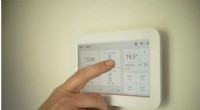
* Thermostats: This is a general term for devices that sense temperature and control heating or cooling systems.
* Temperature controllers: A broader term that includes thermostats but may also refer to devices that regulate temperature in other applications, like industrial processes.
Specific types of devices:
* Heating thermostats: Control heating systems, such as furnaces, boilers, or baseboard heaters.
* Cooling thermostats: Control cooling systems, such as air conditioners, refrigerators, or chillers.
* HVAC thermostats: Control both heating and cooling systems, typically used for home or building climate control.
* PID controllers: (Proportional-Integral-Derivative) are more advanced controllers used in industrial processes for precise temperature control.
* Thermocouples: Measure temperature and can be used in conjunction with other devices to regulate temperature.
* Heat sinks: Devices that dissipate heat from electronic components, preventing overheating.
Other terms:
* Temperature sensors: Devices that detect temperature, but don't necessarily control it.
* Temperature switches: Devices that turn a system on or off at a specific temperature threshold.
The best term to use depends on the specific context. If you're talking about a device that controls the temperature in a home, "thermostat" is the most common and accurate term. But if you're talking about a device that regulates temperature in an industrial process, "temperature controller" or "PID controller" might be more appropriate.