Materials:
* Glass: Most touchscreens use Gorilla Glass or similar chemically strengthened glass for its scratch resistance, durability, and transparency.
* Capacitive Sensor Layer: A thin, transparent layer of indium tin oxide (ITO) is deposited on the glass. ITO is conductive, allowing the touchscreen to detect the electrical field changes caused by your finger.
* Insulating Layer: A thin layer of dielectric material (often silicon oxide) is placed on top of the ITO layer. This acts as an insulator to prevent direct contact between the ITO and the glass, enhancing touch sensitivity.
* Controller IC: A tiny integrated circuit (IC) receives signals from the sensor layer and translates them into touch coordinates for the phone's operating system.
* Backlight: An LED backlight illuminates the display, typically using a liquid crystal display (LCD) or an organic light-emitting diode (OLED) panel.
Properties:
* Conductivity: The ITO layer must be conductive to allow the flow of electrical current, enabling the detection of finger touches.
* Transparency: Transparency is crucial for visibility and allowing the user to see the display through the touch sensor.
* Durability: The touchscreen needs to withstand scratches, pressure, and impacts.
* Sensitivity: The sensor layer must be sensitive enough to register touch without requiring excessive pressure.
* Response Time: The touchscreen should respond quickly to touch input to provide a smooth and responsive user experience.
* Accuracy: The touch sensor must be accurate in detecting the position of the touch, minimizing errors and ensuring precise interaction.
How it works:
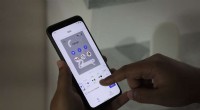
1. Touch Input: When a finger touches the touchscreen, the electrical field around the ITO layer is disturbed.
2. Signal Detection: The change in the electrical field is detected by the sensor layer.
3. Signal Processing: The controller IC receives signals from the sensor layer and calculates the coordinates of the touch.
4. Display Response: The phone's operating system interprets the touch coordinates and sends the appropriate response to the display.
Advanced Technologies:
* Force Touch: Some touchscreens are sensitive to pressure, allowing for different actions based on the force applied.
* Multi-touch: Many screens can register multiple simultaneous touches, enabling features like zooming and scrolling with multiple fingers.
* In-display Fingerprint Sensor: Some phones embed the fingerprint sensor directly into the display for a more integrated experience.
The combination of carefully selected materials and advanced technologies ensures the smooth and reliable operation of touchscreen displays on cellphones.