There are various types of filters, but they all work on the principle of selectively attenuating (reducing) certain frequencies while allowing others to pass through.
Here are some examples of filters:
* Low-pass filter: Allows frequencies below a certain cutoff frequency to pass through while attenuating frequencies above the cutoff frequency.
* High-pass filter: Allows frequencies above a certain cutoff frequency to pass through while attenuating frequencies below the cutoff frequency.
* Band-pass filter: Allows frequencies within a specific range to pass through while attenuating frequencies outside that range.
* Band-stop filter (or notch filter): Attenuates frequencies within a specific range while allowing frequencies outside that range to pass through.
Filters are used in a wide range of applications, including:
* Audio systems: To separate different frequencies for better sound quality.
* Radio communication: To select a specific radio frequency for transmission and reception.
* Medical imaging: To isolate specific frequencies of electromagnetic radiation for different imaging techniques.
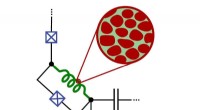
* Electrical circuits: To remove unwanted noise and interference.
The specific type of filter used depends on the application and the desired frequency range.