1. Mathematics:
* Boolean Algebra: George Boole's work in the 19th century laid the foundation for digital logic. His system of representing true/false statements with 1s and 0s (binary) became crucial for computer circuitry.
* Number Theory: Understanding number systems, particularly binary, was essential for storing and processing information.
* Algorithms: The development of algorithms, sets of instructions for solving problems, enabled computers to perform complex tasks.
2. Physics:
* Electricity and Magnetism: Understanding the properties of electricity and magnetism was crucial for designing electronic circuits and components like transistors.
* Semiconductors: The discovery of semiconductors like silicon enabled the development of transistors and integrated circuits, which are the building blocks of modern computers.
* Quantum Mechanics: This field played a key role in understanding the behavior of electrons in semiconductors, leading to improvements in transistor design and miniaturization.
3. Chemistry:
* Materials Science: Advances in materials science enabled the creation of new materials for computer components, including plastics for casing, metals for circuits, and special alloys for heat dissipation.
4. Engineering:
* Mechanical Engineering: Design and construction of physical components, including hard drives, cooling systems, and input/output devices.
* Electrical Engineering: Development of circuits, power supplies, and communication protocols.
* Software Engineering: Development of programming languages and operating systems, which allow humans to interact with computers.
5. Logic and Philosophy:
* Formal Logic: The development of formal logic systems influenced the development of programming languages and helped to define the principles of computation.
6. Biology:
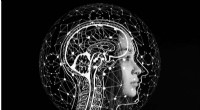
* Neuroscience: The study of the human brain, especially the process of information processing, inspired early computer scientists to develop artificial intelligence.
In summary, the development of the computer was a collaborative effort across many scientific disciplines, each contributing crucial knowledge and tools to the final product. The computer is a testament to the power of scientific inquiry and the interconnectedness of various scientific fields.