Here's why:
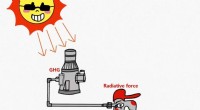
* Point source: This term specifically refers to a source of radiation that can be considered a single point in space. This means the radiation originates from a very small area compared to the distances involved in the application.
* No active dispersal: This implies that the source itself doesn't actively direct or spread the radiation in a particular pattern. The radiation simply emanates outwards from the source point in all directions.
Examples of point sources:
* Stars: They emit light and other electromagnetic radiation from a single, concentrated point in space.
* Light bulbs: They emit light from a filament or LED, which can be considered a point source.
* Radioactive isotopes: They decay and emit radiation (alpha, beta, gamma) from a single point.
It's important to note that while a point source doesn't actively disperse radiation, the radiation itself might be scattered or absorbed by the medium it travels through, leading to a more diffuse distribution of the radiation.