The Basics:
* Electrons: Tiny particles with a negative charge, found within atoms.
* Voltage (Potential Difference): The "push" that drives electrons through a circuit. It's the difference in electrical potential between two points.
* Current: The flow of electrons through a circuit. Measured in amperes (A).
* Resistance: The opposition to the flow of current. Measured in ohms (Ω).
How it Works:
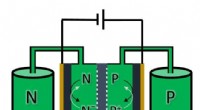
1. Power Source: A battery or other power source creates a difference in electrical potential, causing electrons to want to move from the negative terminal to the positive terminal.
2. Closed Loop: The circuit must be a complete loop for electrons to flow. A break in the loop (an open circuit) stops the current.
3. Components: Various components (like resistors, lights, motors) are connected within the loop.
4. Electron Flow: The voltage pushes electrons through the circuit, creating a current.
5. Resistance: Components within the circuit resist the flow of electrons. This resistance controls how much current flows and how much energy is consumed.
Simplified Analogy:
Imagine a river:
* Voltage: The height difference between the river's source and its mouth.
* Current: The amount of water flowing through the river.
* Resistance: Rocks and obstacles in the riverbed that slow down the flow.
Important Note: The direction of electron flow is conventionally from negative to positive, but in some cases, you might see it described as from positive to negative. This is due to a historical convention that assigned the direction of current flow as the direction of positive charge movement.
In Summary:
Circuits work by providing a pathway for electrons to flow, driven by a voltage source and controlled by resistance. This flow of electrons powers various components and enables us to use electricity for everything from lighting our homes to operating our computers.