Equipment refers to a broader category of physical objects used for a specific purpose or task. It can be:
* Large or small: From a heavy-duty crane to a simple toolbox.
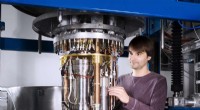
* Complex or simple: A high-tech laboratory setup or a basic hand drill.
* Used for a variety of tasks: A computer can be used for writing, gaming, and research.
Instruments are tools designed for specific measurements or observations. They are often:
* Precisely calibrated: Providing accurate data.
* Used for scientific or technical applications: A microscope, a thermometer, or a voltmeter.
* Designed to interact with specific phenomena: A telescope observes celestial objects, while a seismograph measures earth tremors.
In simpler terms:
* Equipment is everything you need to get a job done.
* Instruments are specific tools for measuring or observing something.
Examples:
* Equipment: A construction site has equipment like cranes, bulldozers, and scaffolding.
* Instrument: A scientist uses a spectrometer to analyze the light from a star.
Overlap:
It's important to note that there is overlap between the two terms. A stethoscope is both an instrument for listening to heartbeats and part of a doctor's medical equipment.
Ultimately, the distinction between "equipment" and "instrument" is a matter of nuance. The context usually clarifies which term is most appropriate.