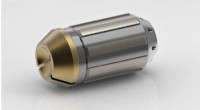
Diodes are electronic components that allow current to flow in only one direction. They have a positive (anode) and a negative (cathode) terminal. Current can only flow from the anode to the cathode, not the other way around.
How diodes reverse current direction:
* Forward Bias: When a positive voltage is applied to the anode and a negative voltage to the cathode, the diode is forward biased. Current can flow through the diode.
* Reverse Bias: When a negative voltage is applied to the anode and a positive voltage to the cathode, the diode is reverse biased. Current cannot flow through the diode.
Applications of Diodes:
Diodes have numerous applications, including:
* Rectification: Converting alternating current (AC) to direct current (DC)
* Switching: Controlling the flow of current in circuits
* Voltage regulation: Maintaining a stable voltage output
* Detection: Detecting the presence of a signal
* Protection: Preventing damage from reverse current
Types of Diodes:
There are various types of diodes, each designed for specific applications, such as:
* Rectifier diodes: Used for rectifying AC to DC
* Zener diodes: Used for voltage regulation
* Schottky diodes: Known for their fast switching speed
* LEDs (Light Emitting Diodes): Emit light when forward biased
It's important to note that not all diodes reverse the direction of current. Some diodes, like Schottky diodes, are known for their low forward voltage drop and fast switching speed, but they do not inherently reverse the direction of current.
Therefore, while a diode is the most common device that can control the direction of current flow, it's important to consider the specific type of diode and its intended application.