Here's why:
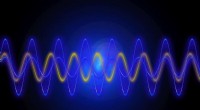
* Amplitude Modulation (AM): In AM, the amplitude (strength) of the carrier wave is varied in proportion to the amplitude of the audio or video signal. This allows the information to be encoded onto the carrier wave.
* Frequency Modulation (FM): While FM is used for high-fidelity audio broadcasting, it's not used for television signals. FM modulates the frequency of the carrier wave, which is not as efficient for transmitting complex video signals.
Additional Details:
* Composite Video Signal: The video portion of a TV signal is actually a composite signal, meaning it combines the brightness (luminance) and color (chrominance) information into a single signal.
* NTSC and PAL: Different television standards (NTSC and PAL) use different methods to encode the color information, but both still use AM for the overall video signal.