1. Enhanced Observation and Data Collection:
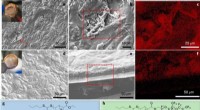
* Microscopes: From simple magnifying glasses to powerful electron microscopes, technology has allowed scientists to see the world at incredibly small scales, revealing the building blocks of life and the intricate details of materials.
* Telescopes: From ground-based observatories to telescopes in space, we can now peer billions of light years into the universe, studying stars, galaxies, and the origins of the cosmos.
* Sensors and Instruments: A vast array of specialized sensors and instruments measure everything from atmospheric conditions to brain activity, providing detailed data for scientific analysis.
2. Accelerated Research and Analysis:
* Computers and Software: Powerful computers and sophisticated software programs allow scientists to process massive amounts of data, run complex simulations, and analyze results at speeds unimaginable just a few decades ago. This has accelerated research in fields like medicine, climate science, and physics.
* High-Throughput Screening: In fields like drug discovery, technology enables scientists to rapidly screen thousands of potential drug candidates, significantly reducing the time it takes to identify promising treatments.
* Artificial Intelligence (AI): AI is increasingly used in scientific research to analyze data, identify patterns, and even propose new hypotheses. This can help scientists make new discoveries and accelerate the pace of scientific progress.
3. Collaboration and Knowledge Sharing:
* Internet and Digital Communication: The internet has revolutionized scientific communication and collaboration. Researchers can share their findings, collaborate on projects, and access vast databases of information from anywhere in the world.
* Online Platforms and Databases: Online platforms and databases allow scientists to share data, publish research papers, and connect with colleagues in their fields. This facilitates the dissemination of scientific knowledge and accelerates the pace of discovery.
* Virtual Reality (VR) and Augmented Reality (AR): These technologies are becoming increasingly important for scientific visualization and collaboration. They allow scientists to experience complex data sets in a more immersive way and to collaborate on projects remotely.
Technology has become an indispensable tool for scientists, allowing them to see the world in new ways, analyze data more efficiently, and share their knowledge with the world. This has led to groundbreaking discoveries in all fields of science, from the smallest subatomic particles to the vastness of the cosmos.