1. Data Collection:
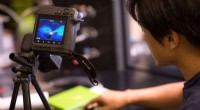
* Sensors and Instruments: Computers control and collect data from various scientific instruments, including telescopes, microscopes, spectrometers, and weather stations.
* Automation: They automate complex experimental procedures, ensuring precision, accuracy, and efficiency in data collection.
* Remote Sensing: Computers enable data acquisition from remote locations, such as satellites for Earth observation or probes for planetary exploration.
2. Data Analysis and Visualization:
* Statistical Analysis: Computers perform complex statistical analyses on vast datasets, revealing trends, patterns, and relationships.
* Data Visualization: They create informative charts, graphs, and interactive visualizations, facilitating the interpretation and communication of research findings.
* Modeling and Simulation: Computers can build and run models to simulate complex systems, predicting outcomes and testing hypotheses.
3. Communication and Collaboration:
* Sharing Research: Computers enable researchers to share data, publications, and research results with colleagues worldwide through online platforms and databases.
* Collaboration Tools: They facilitate real-time communication and collaboration among researchers, regardless of their geographical location.
* Online Resources: Computers provide access to a vast array of scientific databases, journals, and research materials.
4. Scientific Computing:
* High-Performance Computing (HPC): Computers with immense processing power are used to solve complex scientific problems in fields like climate modeling, drug discovery, and astrophysics.
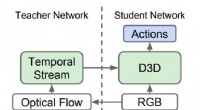
* Artificial Intelligence (AI): AI algorithms are employed to analyze large datasets, discover patterns, and make predictions in various scientific disciplines.
* Machine Learning (ML): ML algorithms are used to build predictive models, automate tasks, and analyze complex scientific data.
5. Other Applications:
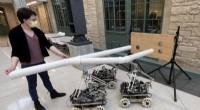
* Lab Automation: Computers control robotic systems for automated sample preparation, analysis, and data acquisition in laboratories.
* Data Management: They help organize, store, and manage vast amounts of scientific data, ensuring its accessibility and integrity.
* Scientific Writing: Computers are used to draft, edit, and format research papers, presentations, and reports.
Examples of Computers in Scientific Research:
* Astronomy: Telescopes are controlled by computers to gather and analyze data from distant stars and galaxies.
* Medicine: Computers are used to analyze medical images, develop new drugs, and personalize treatment plans.
* Climate Science: Supercomputers are used to model climate change and predict future scenarios.
* Biology: Computers help analyze DNA sequences, study protein structures, and develop new genetic technologies.
In conclusion, computers have revolutionized scientific research, enabling scientists to collect, analyze, and share data more effectively than ever before. They have opened new avenues for scientific exploration, leading to groundbreaking discoveries in various fields.