1. Data Analysis and Simulation:
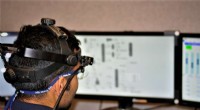
* Massive Data Handling: Computers handle vast amounts of data, enabling scientists to analyze complex phenomena like climate change, genetic sequences, or particle collisions.
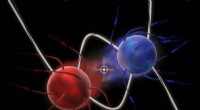
* Simulation and Modeling: Scientists can create simulations of physical and biological processes, allowing them to test hypotheses, design experiments, and understand complex systems that are difficult or impossible to study directly.
* Visualization: Computers create stunning visuals, allowing scientists to analyze and understand complex data sets in intuitive ways.
2. Automation and Experimentation:
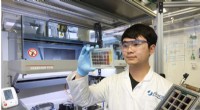
* Automation of Experiments: Computers automate tedious or dangerous tasks, freeing up scientists to focus on analysis and interpretation.
* High-Throughput Screening: Computers can rapidly screen large numbers of samples, accelerating the process of drug discovery or material development.
* Remote Access and Collaboration: Computers allow scientists to collaborate remotely, access shared resources, and conduct experiments from anywhere in the world.
3. New Discoveries and Advancements:
* Accelerated Discovery: Computer simulations have led to new discoveries in fields like astrophysics, particle physics, and materials science.
* Personalized Medicine: Computers enable personalized medicine, allowing doctors to tailor treatments based on an individual's genetic makeup.
* Artificial Intelligence: AI algorithms are being used to analyze data, identify patterns, and make predictions, leading to breakthroughs in fields like medicine, engineering, and environmental science.
4. Communication and Dissemination:
* Publishing and Sharing: Computers facilitate the rapid dissemination of scientific findings through online journals, preprints, and databases.
* Online Collaboration: Researchers can collaborate online, share data, and discuss results in real-time.
* Scientific Communication: Computers have revolutionized scientific communication through online platforms, social media, and interactive visualizations.
Examples of specific impacts:
* Climate Modeling: Supercomputers help scientists simulate climate change, predicting future impacts and guiding policy decisions.
* Drug Discovery: Computers are used to design new drugs, screen potential candidates, and personalize treatment plans.
* Genome Sequencing: Computers analyze vast amounts of genetic data, leading to breakthroughs in understanding human health and disease.
Challenges and Concerns:
* Data Security: The vast amount of data generated by computers poses challenges for data storage, security, and privacy.
* Access and Equity: Not all researchers have equal access to powerful computers, potentially creating a divide in scientific progress.
* Ethical Considerations: The use of AI in science raises ethical concerns about bias, accountability, and the potential for misuse.
In conclusion, computers have fundamentally transformed science, enabling unprecedented discoveries, accelerating progress, and expanding our understanding of the universe. While challenges remain, the future of science is inextricably linked to the ongoing development and integration of computing power.