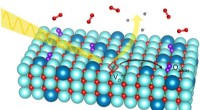
Here's how it works:
* Normal State: A photoconductor is normally a poor conductor of electricity (like an insulator).
* Light Exposure: When light shines on the material, it absorbs the light energy. This energy excites electrons within the material, allowing them to move more freely and increase conductivity.
* Conductivity: The more light the material receives, the more conductive it becomes.
Examples of photoconductors:
* Cadmium Sulfide (CdS): Used in light meters and other light-sensitive devices.
* Selenium: Used in xerography (photocopiers) and solar cells.
* Silicon: Used in solar cells and some types of photodetectors.
Key Point: Photoconductors are not the same as electrical conductors like copper or silver. They are materials whose conductivity is significantly influenced by light.