1. In Biology:
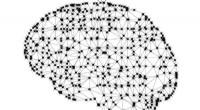
* The brain: In animals, the brain is often considered the control center for many functions like movement, sensation, thought, and emotion. It receives information from the body and sends signals to direct its actions.
* The nucleus of a cell: This is the "brain" of a cell, containing the genetic material (DNA) that controls the cell's functions and directs the production of proteins.
2. In Engineering:
* Control systems: These systems are designed to regulate and manage processes in machines, devices, and even entire systems. Examples include thermostats controlling temperature, autopilot systems in aircraft, and traffic control systems.
* Central processing unit (CPU): In computers, the CPU is the core component that executes instructions, performs calculations, and manages other components. It's often referred to as the "brain" of the computer.
3. In Research:
* Control group: In experimental research, a control group is a group that does not receive the treatment or intervention being tested. This group is used as a baseline for comparison to see if the treatment has any effect.
4. In Other Fields:
* Control room: This is a dedicated space for monitoring and controlling processes, often found in power plants, factories, and other industrial settings.
To understand what "control center" refers to in a specific context, you need to consider the subject matter and the specific situation.
Let me know if you can provide more context, and I can help you figure out what the control center specifically refers to in your case!