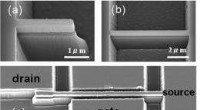
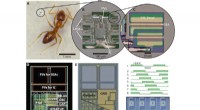
A diode is a semiconductor device that acts like a one-way valve for electricity. It allows current to flow easily in one direction (forward bias) but blocks current flow in the opposite direction (reverse bias).
Here's a breakdown of how it works:
* Forward Bias: When a positive voltage is applied to the anode (positive terminal) and a negative voltage to the cathode (negative terminal), the diode is forward biased. This allows electrons to easily flow from the cathode to the anode, allowing current to pass through.
* Reverse Bias: When the polarity of the voltage is reversed, the diode is reverse biased. This creates a depletion region within the diode, which acts as a barrier, preventing current flow.
Key Characteristics of a Diode:
* Non-linear: The relationship between voltage and current is not linear, meaning the current doesn't increase proportionally to the voltage.
* Forward Voltage Drop: A diode has a small voltage drop (typically around 0.7 volts for silicon diodes) when forward biased.
* Breakdown Voltage: When the reverse voltage across the diode exceeds a specific value (breakdown voltage), the diode starts conducting in the reverse direction.
Applications of Diodes:
Diodes are versatile components used in various electronic circuits, including:
* Rectification: Converting alternating current (AC) to direct current (DC).
* Voltage Regulation: Maintaining a stable voltage level.
* Signal Detection: Detecting and amplifying weak signals.
* Protection: Protecting sensitive circuits from voltage spikes.
* Switching: Controlling the flow of current in circuits.
* LEDs: Light-emitting diodes are used for illumination.
Different Types of Diodes:
There are various types of diodes, each suited for specific applications, such as:
* Zener Diodes: Used for voltage regulation and clamping.
* Schottky Diodes: Offer lower forward voltage drop than silicon diodes.
* Tunnel Diodes: Exhibit negative resistance characteristics.
* Varactor Diodes: Used for tuning circuits.
Understanding the workings of a diode is crucial for anyone interested in electronics, as it's a fundamental component in various circuits.