Automating tasks: AI can be used to automate many of the time-consuming tasks that scientists have to perform, such as data collection, data analysis, and image processing. This frees up scientists to focus on more creative and challenging tasks.
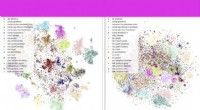
Providing new insights: AI can be used to identify patterns and relationships in data that would be difficult or impossible for humans to find. This can lead to new insights into scientific problems and the development of new theories.
Enabling scientists to explore new avenues of research: AI can be used to create simulations and models of scientific phenomena that would be impossible or too expensive to study in the real world. This allows scientists to explore new avenues of research and test new ideas.
Here are some specific examples of how AI is being used in science:
* In astronomy, AI is being used to analyze data from telescopes and identify new planets and galaxies.
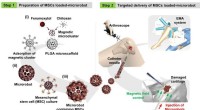
* In biology, AI is being used to develop new drugs and treatments by identifying new targets for drug therapies and predicting how drugs will interact with the human body.
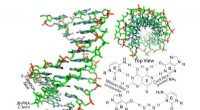
* In chemistry, AI is being used to design new materials and compounds by predicting how molecules will react with each other.
* In climate science, AI is being used to model the Earth's climate and predict how it will change in the future.
* In physics, AI is being used to study the fundamental properties of matter and the universe.
AI is a powerful tool that is revolutionizing the way science is done. It is enabling scientists to make discoveries and develop new technologies that would not have been possible without it.