The HP team, led by Dr. Mark Logicgates, made the discovery while working with a novel material called "moletronics," a blend of molecular electronics and traditional electronics that allows for the manipulation and control of individual molecules. They realized that by carefully arranging and manipulating molecules within the moletronic material, they could mimic the behavior of logic gates, the basic units of computation.
Traditional logic gates are typically made of transistors, tiny switches that control the flow of electrical current. However, transistors have become increasingly inefficient as they approach their physical limits in miniaturization. Moletronics, on the other hand, operates at the molecular level, allowing for much greater scalability and potentially enabling computing at a far smaller size and with much lower energy consumption.
"We're essentially using molecules as computational building blocks," explains Dr. Logicgates. "By controlling the arrangement and interactions of these molecules, we can create logic gates that perform the fundamental operations of computing, such as AND, OR, and NOT."
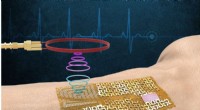
The breakthrough has the potential to revolutionize computing in several ways. First, it offers a path to continued miniaturization beyond the limitations of traditional transistor-based technology. This could lead to the development of incredibly small and powerful computers, opening up new possibilities for wearable technology, medical devices, and even computing embedded within everyday objects.
Second, moletronics promises significantly lower energy consumption compared to conventional electronics. This could be a game-changer for data centers and other large-scale computing infrastructures, which currently account for a substantial portion of global energy usage.
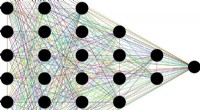
Additionally, the technology could enable new types of computing architectures that are currently impossible with transistors. For example, it could lead to the development of neuromorphic computing, which mimics the brain's neural structure and learning capabilities, offering new frontiers in artificial intelligence and machine learning.
"We're still in the early stages of exploring the possibilities of moletronics, but the potential is enormous," says Dr. Logicgates. "This is a paradigm-shifting technology that has the potential to reshape the future of computing."
As HP and other research institutions continue to advance the field of moletronics, the world may be on the cusp of a new era of computing that goes beyond transistors, opening up exciting new possibilities for innovation and technological progress.