Researchers at the University of California, Berkeley, have developed a groundbreaking method that allows items to sense how they are being touched. This opens the door to novel interaction with robots and haptic interfaces. The technology detects not only presence, but also pressure, location, and even subtle changes in the tactile sensation.
Revolutionizing Human-Machine Interaction
For robots and other haptic interfaces, this ability to sense is crucial in accurately perceiving the user's intent. This advancement brings us one step closer to real-world applications such as:
1. Intuitive Touch Interfaces:
Imagine touchscreens capable of distinguishing between a gentle tap, a firm press, or a swipe. It would revolutionize the way we interact with smartphones and other devices.
2. Humanoid Robots:
Equipping robots with this technology would significantly improve their interaction with humans. They would be able to distinguish between a handshake, a caress, or a shove.
3. Remote Manipulation:
It would enable remote users to touch objects virtually while experiencing near-real sensations, making tasks in hazardous environments safer.
4. Medical Applications:
With enhanced touch perception, medical devices could improve diagnosis and surgery by providing more accurate tactile feedback.
5. Interactive Materials:
Touch-sensitive materials could be used in architecture, fashion, and sports to enhance user experiences.
The Secret Behind the Magic
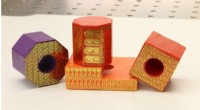
The technology involves a thin, flexible film embedded with sensors. When the film is attached to an object, it detects touch by changes in electrical capacitance between the sensors. This technique not only locates the touch but also provides information about pressure and texture, just like our skin does.
Unleashing the Potential
Currently, the team's focus is on perfecting the sensitivity and accuracy of the film. Researchers expect the technology to be ready for commercial applications in a few years. It holds immense promise for improving our interactions with the digital and physical worlds, offering experiences similar to those portrayed in futuristic sci-fi movies.
(See Video)