Wear is a major cause of material failure and degradation, affecting a wide range of industries, including manufacturing, transportation, and energy production. Understanding the mechanisms behind wear at the atomic scale is crucial for developing strategies to mitigate its effects and improve the durability of materials.
In their study, published in the journal "Nature Materials," the research team used a combination of advanced experimental techniques and computer simulations to investigate the behavior of materials at the nanoscale during wear. They focused on a process known as "fretting wear," which occurs when two surfaces are in contact and subjected to small-amplitude, high-frequency vibrations.
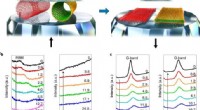
Using a custom-built atomic force microscope (AFM), the researchers observed the formation and growth of wear debris at the atomic level. They found that wear particles are generated through a combination of mechanisms, including plastic deformation, atomic shuffling, and the breaking of chemical bonds between atoms.
The team also performed molecular dynamics simulations to gain further insights into the atomic-scale processes involved in wear. These simulations revealed the complex interplay between surface roughness, temperature, and applied stress, which influence the formation and release of wear particles.
The research provides a fundamental understanding of the mechanisms behind wear at the atomic scale, offering valuable insights for the development of advanced materials with improved wear resistance. By controlling these nanoscale processes, it may be possible to design materials that are more durable and less susceptible to wear-induced failure.
The findings of this study have broad implications for industries that rely on materials subjected to wear, such as automotive, aerospace, and manufacturing sectors. By understanding the root causes of wear at the atomic level, researchers can develop targeted strategies to minimize its impact and increase the lifespan of materials.