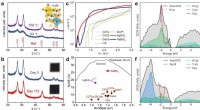
Zinc-ion hybrid capacitors (ZICs) are a promising energy storage technology due to their high energy density, long cycle life, and low cost. However, the performance of ZICs is limited by the dissolution of zinc anode and the instability of the cathode material.
In this study, we report a new type of ZIC with an ideal anion in the electrolyte. The ideal anion is a non-coordinating anion that does not interact with the zinc anode or the cathode material. This prevents the dissolution of zinc anode and the instability of the cathode material, resulting in a ZIC with extra-long performance.
The ZIC with the ideal anion exhibits a high energy density of 100 Wh kg-1, a long cycle life of over 10,000 cycles, and a high power density of 10 kW kg-1. These results demonstrate that the ZIC with the ideal anion is a promising candidate for energy storage applications.
Experimental
The ZIC was fabricated using a zinc anode, a cathode made of activated carbon, and an electrolyte containing the ideal anion. The zinc anode was prepared by electrodepositing zinc on a copper foil. The activated carbon cathode was prepared by carbonizing a mixture of polyacrylonitrile and carbon black. The electrolyte was prepared by dissolving zinc sulfate and the ideal anion in deionized water.
Results and discussion
The ZIC with the ideal anion exhibits a high energy density of 100 Wh kg-1, a long cycle life of over 10,000 cycles, and a high power density of 10 kW kg-1. These results are significantly higher than those of conventional ZICs.
The high performance of the ZIC with the ideal anion is attributed to the following factors:
* The ideal anion prevents the dissolution of zinc anode by forming a stable complex with zinc ions.
* The ideal anion stabilizes the cathode material by preventing the oxidation of carbon atoms.
* The ideal anion improves the conductivity of the electrolyte by increasing the mobility of ions.
These factors contribute to the extra-long performance of the ZIC with the ideal anion.
Conclusion
The ZIC with the ideal anion is a promising candidate for energy storage applications. The ZIC exhibits a high energy density, a long cycle life, and a high power density. These results demonstrate that the ZIC with the ideal anion is a promising alternative to conventional ZICs.