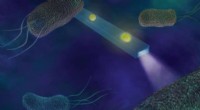
1. Improved Laser Technologies: The development of high-powered and stable lasers, particularly near-infrared lasers, has enabled researchers to achieve tighter confinement of cells and exert stronger forces without causing damage.
2. Holographic Optical Tweezers: Holographic techniques allow the creation of multiple optical traps, enabling researchers to simultaneously manipulate multiple cells or subcellular structures with high precision. This advancement has facilitated experiments involving cell-cell interactions, organelle tracking, and the study of cellular mechanics.
3. Dynamic Optical Traps: The development of dynamic optical traps, such as dual-beam or time-shared traps, has allowed for more versatile manipulation of cells. These techniques enable researchers to apply controlled forces, induce rapid movements, or rotate cells, providing insights into cellular processes and mechanics.
4. Integration with Fluorescence Microscopy: The integration of optical tweezers with fluorescence microscopy has enabled the simultaneous manipulation and visualization of cells. This has facilitated experiments that combine real-time imaging with force measurements, allowing for the study of cellular structures, dynamics, and interactions with high spatial and temporal resolution.
5. Microfluidic Integration: The integration of optical tweezers with microfluidic devices has enabled precise cell manipulation within controlled environments. This combination allows for the study of cells under specific chemical conditions, fluid flows, or confinement, mimicking physiological or pathological scenarios.
6. Advanced Image Analysis: Developments in image analysis algorithms and software have enabled the accurate tracking and quantification of optically trapped cells. This has enabled researchers to extract detailed information about cellular mechanics, motility, and responses to external stimuli.
7. Automation and Feedback Control: Recent advances have enabled the automation of optical tweezers systems and the incorporation of feedback control mechanisms. These advancements have improved the precision, reproducibility, and efficiency of cell manipulation experiments.
The continued refinement of optical tweezers technology and its integration with other techniques have made it an indispensable tool in cell biology, biophysics, and biomedical research. Optical tweezers have enabled researchers to probe the intricate details of cellular processes at the single-cell and subcellular levels, leading to significant insights into cell behavior and function.