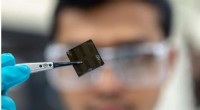
The testing program began with the individual components of the camera. Each component was tested to ensure that it met the required specifications. The components were then integrated into the camera and tested as a whole.
The camera was tested in a variety of conditions to simulate the extreme conditions it will encounter in space. It was tested for temperature extremes, vibration, and radiation. It was also tested for its ability to withstand the launch environment.
The camera passed all of the tests and is now ready to be installed in the Rubin Observatory. The LSST Camera is the key to the Rubin Observatory's success. It will be used to capture billions of images of the night sky over a period of ten years. These images will be used to create a detailed map of the universe and to study the evolution of galaxies.
Here are some of the specific tests that the LSST Camera underwent:
* Temperature testing: The camera was tested at temperatures ranging from -100 degrees Celsius to +50 degrees Celsius. The camera had to function properly at both extreme temperatures.
* Vibration testing: The camera was subjected to vibration levels similar to those it will experience during launch.
* Radiation testing: The camera was exposed to radiation levels similar to those it will encounter in space.
* Vacuum testing: The camera was tested in a vacuum chamber to simulate the conditions of space.
* Optical testing: The camera was tested to ensure that it meets the required optical performance specifications.
The LSST Camera passed all of these tests and is now ready to be installed in the Rubin Observatory. The LSST Camera is the key to the Rubin Observatory's success. It will be used to capture billions of images of the night sky over a period of ten years. These images will be used to create a detailed map of the universe and to study the evolution of galaxies.