However, one of the challenges with supercapacitors is that they have a relatively low energy density compared to batteries. This means that they can store less energy for a given size and weight. As a result, supercapacitors have not been widely used in portable electronic devices, such as laptops and smartphones.
New research from the Massachusetts Institute of Technology (MIT) could help to overcome this challenge. The researchers have developed a new type of supercapacitor that has a much higher energy density than previous designs. This breakthrough could pave the way for the use of supercapacitors in a wider range of electronic devices, including laptops.
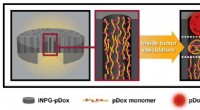
The new supercapacitor is made from a material called graphene, which is a single layer of carbon atoms. Graphene has a very high surface area, which allows it to store a large amount of energy in an electric field. The researchers also used a new technique to fold the graphene into a three-dimensional structure, which further increases the surface area and energy storage capacity.
In tests, the new supercapacitor was able to store 10 times more energy than previous designs. It was also able to be charged in just one minute, compared to hours for traditional batteries.
The researchers believe that their new supercapacitor could be used to charge laptops in just a few minutes. This would be a major breakthrough, as it would eliminate the need to wait for hours for a laptop to charge.
The new supercapacitor is still in the early stages of development, but it has the potential to revolutionize the way we charge our electronic devices. If successful, it could lead to a new generation of laptops and other electronic devices that can be charged in just a matter of minutes.
Here are some of the key advantages of supercapacitors over traditional batteries:
* Fast charging: Supercapacitors can be charged in a matter of seconds or minutes, compared to hours for traditional batteries.
* High power density: Supercapacitors can deliver high bursts of power, making them ideal for applications that require a lot of power in a short amount of time.
* Long lifespan: Supercapacitors can last for millions of charge-discharge cycles, compared to a few hundred cycles for traditional batteries.
* Wide temperature range: Supercapacitors can operate in a wide range of temperatures, from -40°C to 85°C.
However, supercapacitors also have some disadvantages compared to traditional batteries:
* Low energy density: Supercapacitors have a relatively low energy density compared to batteries, meaning that they can store less energy for a given size and weight.
* High cost: Supercapacitors are currently more expensive than traditional batteries.
Despite these disadvantages, supercapacitors have the potential to revolutionize the way we charge our electronic devices. As research continues to improve the energy density and cost of supercapacitors, they are likely to become increasingly common in a wide range of applications.