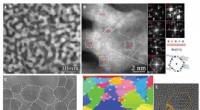
Researchers at the University of California, Berkeley, have developed a way to use DNA to create tiny electronic circuits. The circuits are made by depositing DNA molecules onto a surface and then using them as a template to grow metal electrodes. The electrodes can be used to create transistors, the basic building blocks of all electronic devices.
The researchers say that DNA-based electronics have several advantages over traditional silicon-based electronics. DNA is a very flexible material, so it can be used to create circuits on flexible surfaces, such as plastic or paper. DNA is also a very efficient conductor of electricity, so DNA-based circuits can be much more energy-efficient than traditional silicon-based circuits.
The researchers believe that DNA-based electronics could eventually be used to create a new generation of smaller, smarter, and more energy-efficient electronic devices, such as wearable computers, implantable medical devices, and even "smart" clothing.
Here are some of the key findings of the study:
* DNA can be used to create tiny electronic circuits.
* DNA-based electronics have several advantages over traditional silicon-based electronics, including flexibility, efficiency, and low cost.
* DNA-based electronics could eventually be used to create a new generation of smaller, smarter, and more energy-efficient electronic devices.
The study was published in the journal Nature.